For a quick overview of what I replaced each thing with and the cost, scroll to Cost Breakdown!
I care a lot about privacy, especially in the aftermath of the Edward Snowden files and the United States' mass, indiscriminate surveillance of private citizens. If you want the full picture, Glenn Greenwald has a great TedTalk on why privacy matters! And it's not just governments – mega-corporations like Meta, Google, X/Twitter, etc. are using extensive data from my own behaviours online without my consent.
Even if I have nothing to hide, I don't want my accounts controlled by someone else or my voice used without my consent. My behaviour changes dramatically when I'm watched. Have you ever tried to finish a school exam with someone standing over your shoulder watching your every move? It's miserable. I'm suddenly making mistakes I would never make on my exam!
Which is to say: people should be able to do things without someone else watching, without someone else assuming bad intentions, like we're bad at math because we're making basic math mistakes because we're being observed.
We have a right to privacy.
So over the past few months I've gotten into privatising my life by focusing on EU-only tech replacements. I started first with Degoogling, which is the process of removing yourself from Google. I read two eye-opening and unsettling articles: Richard Stallman's Reasons to not use Google and Douglas Schmidt's study on Google's Data Collection, including how Gmail was planned from the start as a massive surveillance system! Seriously, read them. It's only skimming the surface. And it's not just Google. It's every tech company imaginable. Here's another great TedTalk by by Finn Lützow-Holm Myrstad about how tech companies deceive you into giving up your data and privacy.
If after all that and you're still not moved, I highly recommend reading this article called Read this if you have nothing to hide.
The point is: you should never be giving governments or tech companies your data. You never know when they could turn against you.
Social Media
First, I started removing myself from social media.
I never had a Facebook, Instagram, or WhatsApp, so that was easy. X/Twitter I had a years-long dormant account that I deactivated, and removed myself from TikTok after meticulously saving every recipe I needed (priorities...) I wasn't big on social media to begin with, so it was no hard loss to deactivate.
Leaving social media was also great for mental health! My anxiety and dread about the state of the world plummeted. I'm not ignorant about the news, but I decide where and when I go looking for it.
Around this time I also discovered During this time I also learned about ATProtocol and Fediverse which is a decentralised, open-sourced social media ecosystem started where your data is controlled by you, not a big tech company. BlueSky falls under the ATProtocol and Mastodon is under the Fediverse. It's genuinely a better way to make the internet fun and open without Big Tech scraping your every move.
Operating System
Next, I looked at Linux to replace my PC's Windows OS. I switched to Linux Mint, made in Ireland and set it up easily. There was a bit of a adjustment period to the new OS, but within a week I could tell that it was light years better than Windows. I wasn't getting spammed with OneDrive notifications, AI features, and other stuff I didn't ask for. Linux put control of my own computer in my hands instead of Apple's or Microsoft's.
Website
With social media and my OS sorted, I turned to my website. I decided I didn't want to use WordPress, Squarespace, Framer, or any of the popular drag-and-drop options –and because I wanted my website to be unique and tailored to me (you're reading on it right now!) So I learned about Kirby CMS, a buy-once lifetime CMS based in Germany. There was a learning curve with HTML/CSS, but once I got the hang of it, I vastly preferred it over any other CMS!
I paired it with Hostinger, a Lithuanian company, for my domain and web hosting.
Together, Hostinger Kirby CMS are what brought tessgrossman.com to life!
Web Search
I was using DuckDuckGo's search engine on Firefox as my mainstay for several years. I have no problem with DuckDuckGo (despite it being US-based) and would still happily recommend it! But it is a fork of Bing; I wanted a unique search engine based in Europe, and with the comprehensiveness of Google's search without giving up my privacy. I found Startpage, based in the Netherlands that puts privacy first, doesn't log personal data, IP, or search history. Long-term, I feel more secure trusting Startpage. So, I made the swap.
Then came the steep wall that is Google...
I did a lot of research into email replacements. The good news is just about every email alternative out there offers a free 30-day trial, so I tried a bunch from the European Alternatives list like Tuta, Proton, and Infomaniak before finally settling on Mailbox.org, a German company.
What made me decide on Mailbox.org was reading Privacy Guide's recommended email services because I care a lot about my email security, especially after it was reported Google was using Gmail to train its AI. Email security matters a lot to me, and that was the final push.
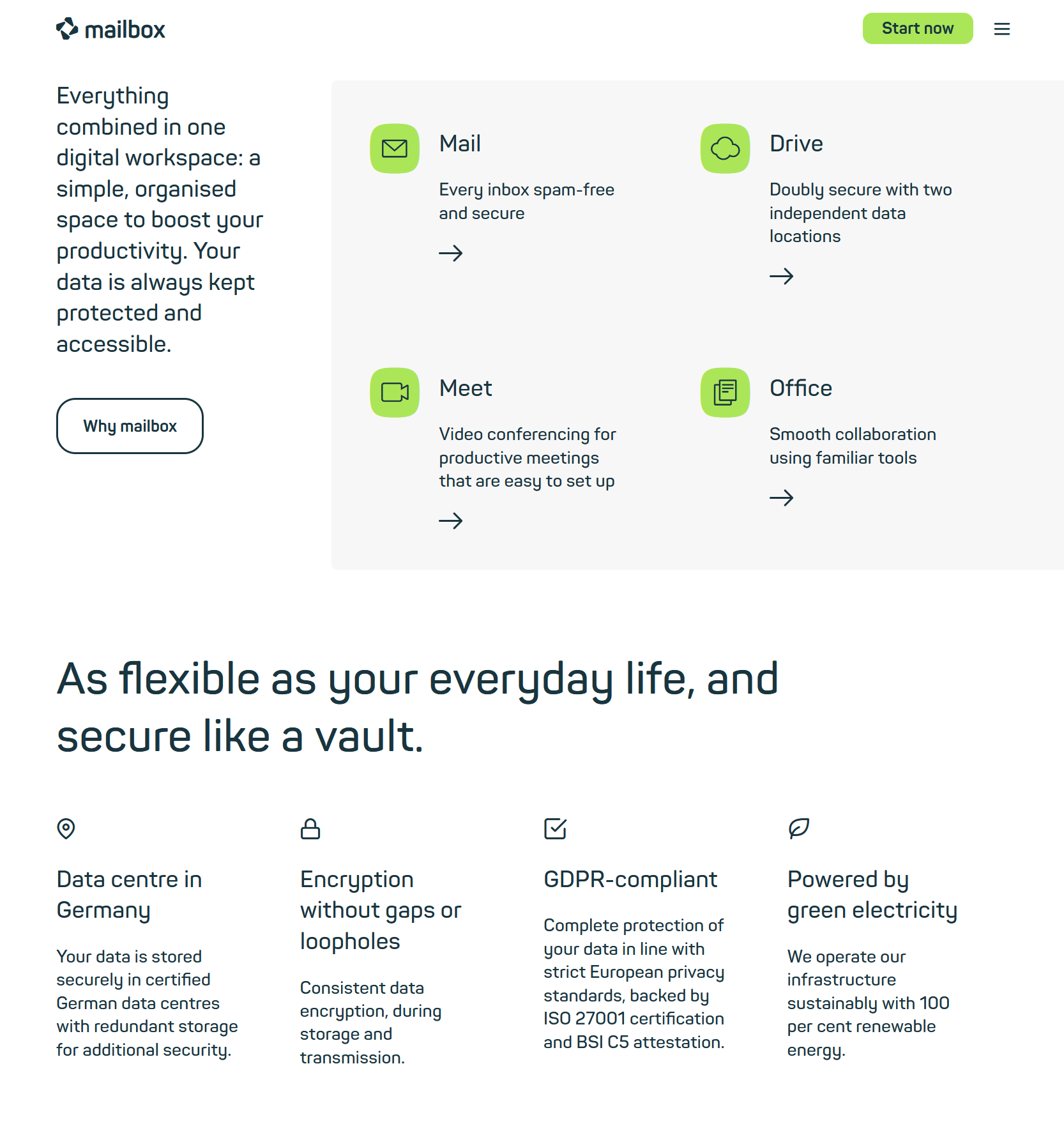
Mailbox.org comes with its own Drive and Office! I prefer an online office space over something like LibreOffice because I liked accessing my documents from anywhere, and I wanted something close to what Google Drive had.
Before I signed up for Mailbox.org, I used dDocs for awhile, which was a solid, free Google Docs alternative in the meantime.
Photos
This was the dreaded thing I put off for months: Google Photos. I had years of photos, and I knew untangling myself from the convenience of Google Photos wasn't going to be a pain-free process.
I debated between Immich and Ente, and finally settled on Immich because of the buy-once lifetime deal.
Please note, Immich requires you to install other software like Docker to use. If you want an easier option, choose Ente (for a monthly subscription); if you want to put in a little more work for a one-time fee, Immich is the way to go.
I won't lie – it took a solid week of painstakingly hunting down all of my photos, downloading them, then uploading it to Immich. This was the hardest part of my whole EU tech-only journey. There's no easy or convenient way to do it other than to grin and bear it for the sake of privacy. And I wasn't going to let Google keep scanning photos of my loved ones for its own purposes without my consent.
Phone
Finally, I looked at EU-made phones. I have an Android right now that's still full of Google services that I can't disable. But I'm also someone who won't replace my technology until it's completely dead. So my plan is to replace my Samsung Galaxy S23 with a La Jolla phone, made in Finland and running Sailfish OS, once my phone decides go into the light.
Wrapping Up
All-in-all, this process took me a solid two months. I don't regret it and am much happier for having made the switch, but don't let anyone tell you it's an easy or painless process.
If anything, I recommend going bit-by-bit. Even if you can't migrate everything to an EU tech stack, some is better than nothing.
Cost Breakdown
Here is how much I paid for each thing and what my final alternatives ended up being:
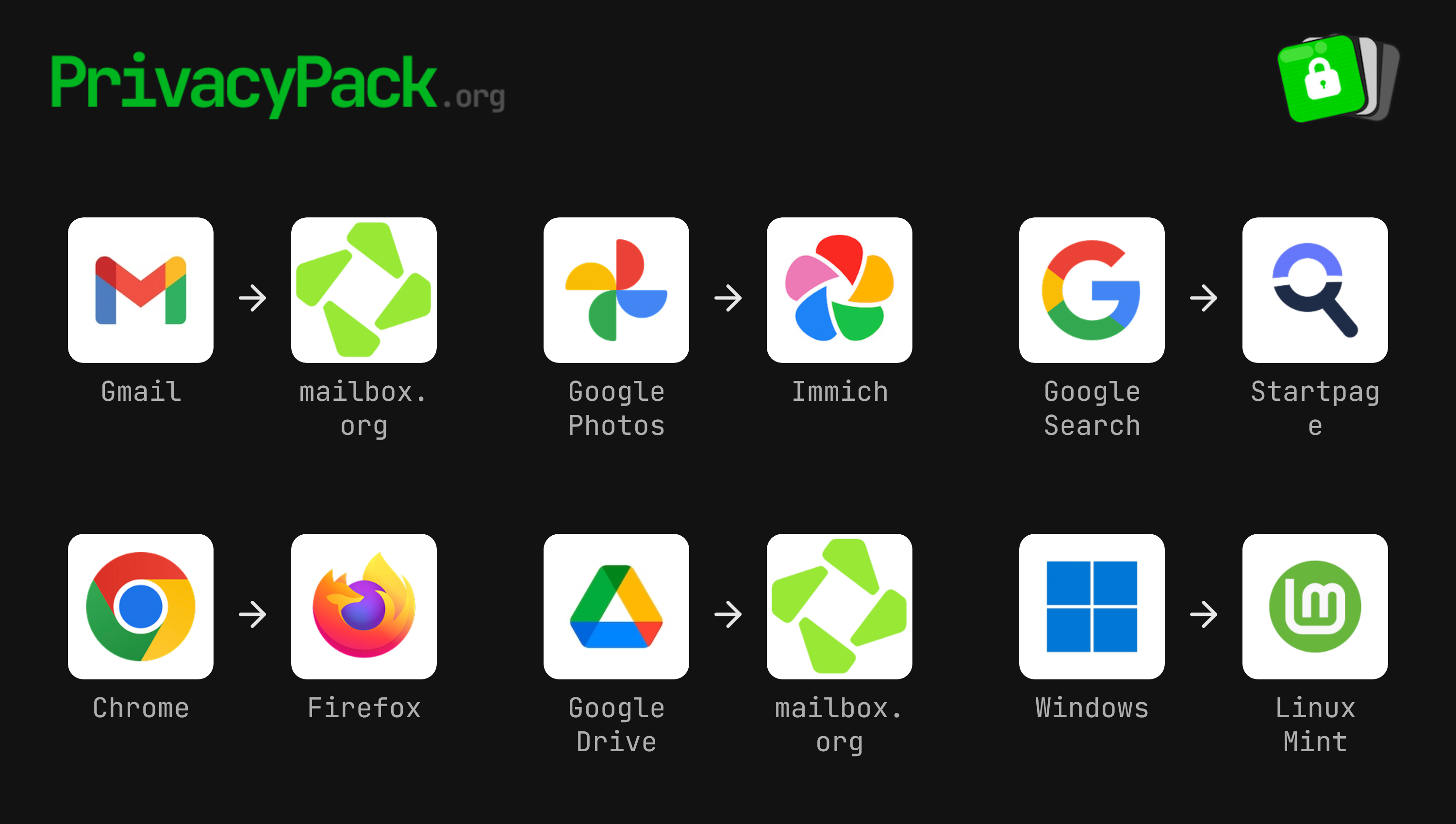
- Gmail & Google Drive -> Mailbox (€30 1-year subscription)
- Google Photos -> Immich (€20 once)
- Domain -> tessgrossman.com (€30 for 3-year subscription)
- Web Hosting -> tessgrossman.com (€70 for 4-year subscription)
- Wordpress -> Kirby CMS (Free with student license or €100 once)
Total paid: €150 euro. Potentially €250 if I had to buy my Kirby license. The tessgrossman.com domain and web hosting together cost €27,50 per year since I paid in bulk, and Mailbox is basically €2,50 a month.
I was pretty pleased with the prices. I know everyone likes free things, which is part of why the Google ecosystem is so attractive in first place. But think of it this way: you're paying for security and peace of mind. You're paying developers directly (who often work in small teams) a small yearly or monthly fee (less than the price of one cup of coffee!) to keep the lights on and your information protected. That feels like a fair deal to me.